

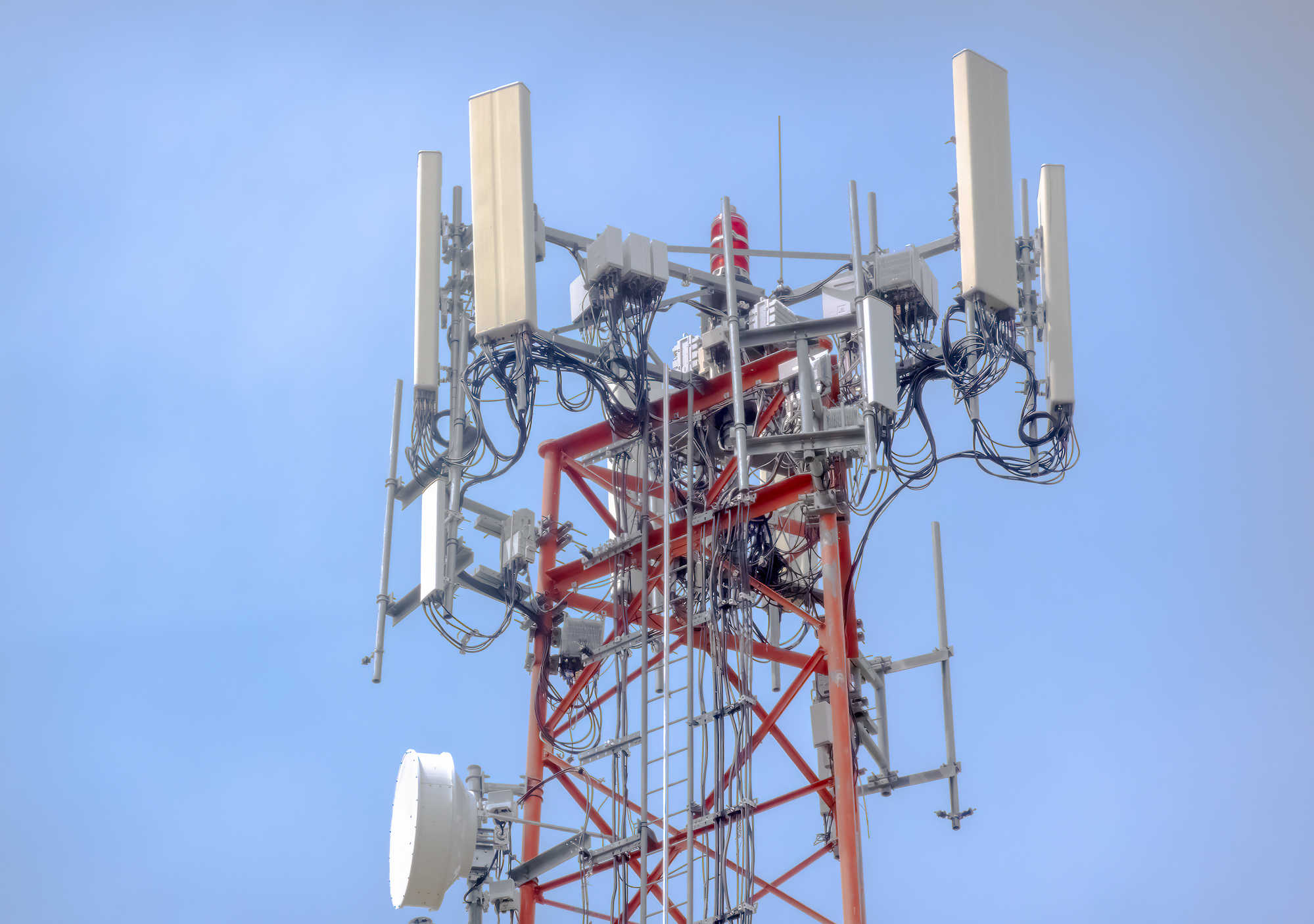
A territory-wide cell signal study covering 2023 and 2024 found One Communications delivered the strongest overall performance and Liberty VI the weakest, but when the findings were presented to lawmakers this week, Liberty said it has made significant improvements since the study period and pointed to permit delays as a continuing obstacle to further upgrades.

The results were presented before the Committee on Housing, Transportation, and Telecommunications on Wednesday by Greg Guannel, director of the Caribbean Green Technology Center at the University of the Virgin Islands. Dr. Guannel said the study, led by the University of Notre Dame, assessed Reference Signal Received Quality, or RSRQ, across St. Croix, St. Thomas and St. John, comparing all three mobile providers. He said the research focused on issues such as dropped calls, slow speeds and instability.
“What we see is that depending on where you are on the island, the quality of the signal varies a lot,” Dr. Guannel reported. The study involved driving across each island multiple times, he said, and found that some areas — particularly more populated parts of each island — received much better coverage.
According to Dr. Guannel, One Communications, known as Viya at the time of the study, performed best overall. The results showed that “overall, Viya provides relatively good to sometimes very good quality.” Even so, he said there were still “regions where the signal varies a lot during the time that we did our measurements.”
T-Mobile, he said, delivered “average service overall,” though in St. John there were areas with “receive fair to poor quality.”
Liberty VI, Dr. Guannel said, “performs the worst.” He said he did not want to “make too much of a commentary on that” and emphasized, “I'm just presenting the data.” He described Liberty’s signal as fairly consistent, but said “the quality seems to be fair to poor in general.” In parts of St. Thomas and St. John, he added, the data showed “significant variation,” meaning “users may experience good service in one location and poor service just a short distance away.” That, he said, pointed to an issue with “how the network is configured and how signals interact with the environment.”
A follow-up study is already underway, with results expected by next spring. Dr. Guannel told lawmakers that “service performance may have improved” and said the next round will include “more repeated measurement across locations,” with patterns to be analyzed in greater detail.
Committee members said the results were useful. “I find it amazing. In my opinion, it actually will assist them in many ways, in terms of the deliverables to the customers,” said committee chair Senator Marvin Blyden.
Executives from One Communications and Liberty VI were present during the hearing and responded to the findings. Siobhan James-Alexander, chief executive officer of One Communications, said the company has “optimized our network significantly” since the study was conducted and continues to do so. She said the company has also deployed 5G across a number of sites. Like the study team, One Communications has been conducting drive tests “to understand where there are deficiencies” and “coverage gaps,” she said, adding that coverage projects are expected to continue for at least the next three years.
Liberty VI also said its network has improved since the study period. Catherine Kling, interim general manager, said the company has “made a significant amount of improvement since the cycle that was presented in the study.” Rayeq Badran, Liberty’s senior manager for mobile planning and engineering, said the company has since “employed four new bands.” He also suggested the study may not have fully captured Liberty’s 5G capability, which he said was already available during the study period, and questioned the “kind of devices that has been [used in] this study.”
Badran also addressed ongoing connectivity problems in eastern St. Croix, telling lawmakers that Liberty is working to install new infrastructure but is still awaiting permits from the Department of Planning and Natural Resources. “We need the help of the local authorities to get the permits, because we have couple of new builds that we still cannot have the benefit of this location due to the permit process,” he told Senator Blyden.
Senator Kurt Vialet noted that those delays are often tied to opposition from nearby residents. He said the permitting process is frequently slowed because “individuals are just saying we don't want it there, and then our service overall is being diminished now.”
A Liberty representative said one proposed tower for eastern St. Croix has been tied up in the CZM permitting process for about a year. Attorney Wanda Perez-Alverez said that although a determination hearing had been promised, it was tabled and “it turned out to be another public hearing where people started with giving arguments again.” She said the CZM committee has now asked to reevaluate the site. “You cannot put these antennas just anywhere. It's very precise locations. We need to do very precise analysis to determine these locations.”
Leia La Place Matthew, territorial planner with the Department of Planning and Natural Resources, confirmed that the department had received public concerns. She said one permit had been granted for a site, but that it has since “been appealed by other adjacent property owners.”
The discussion ended with a broader question about how the territory balances public concerns with the need for stronger communications infrastructure.

“At some point, we have to decide as a community what our priorities are, in terms of number one, safety, number two, communications,” said Senator Blyden.


Advertisements