

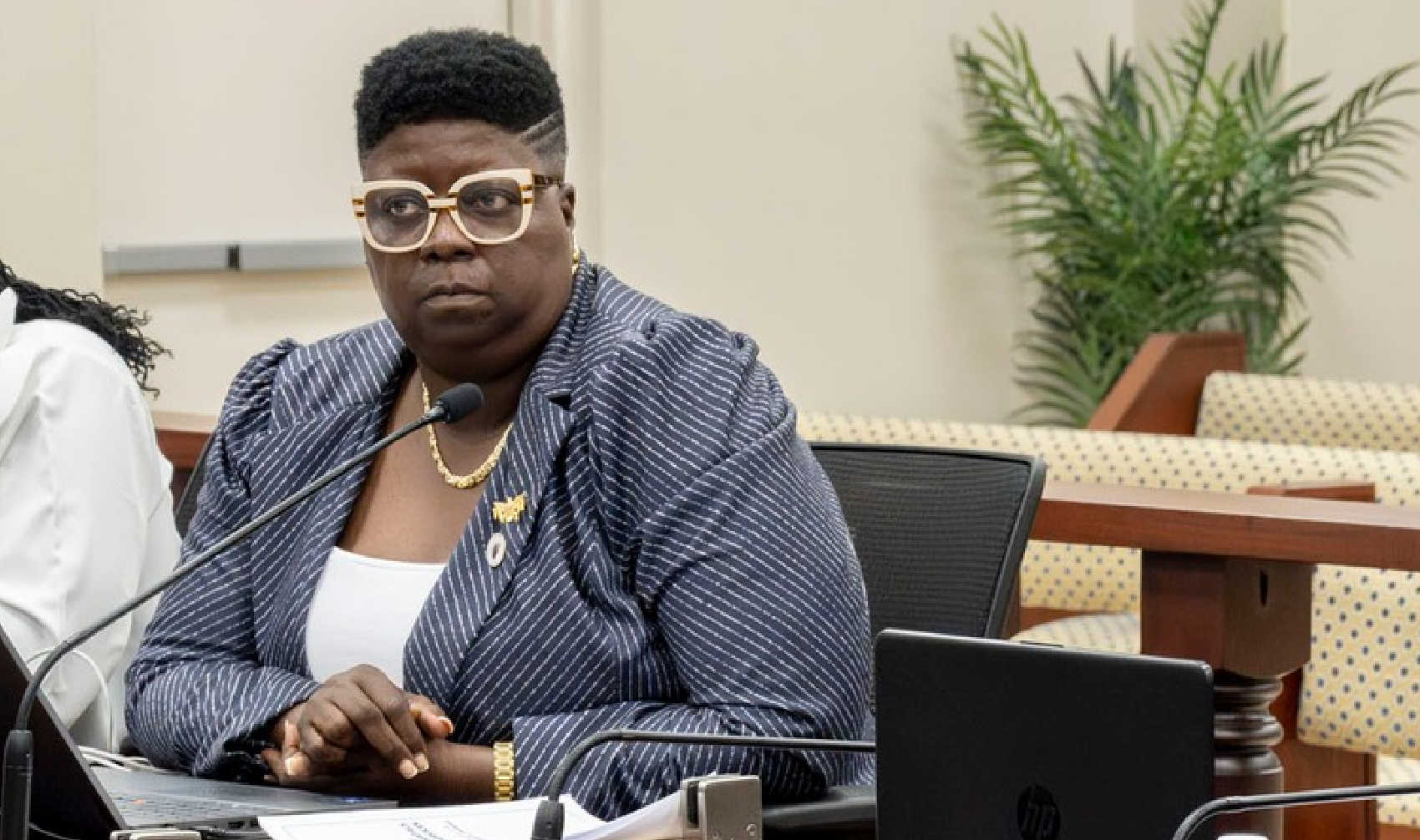
DHS Commissioner Averil George.

The V.I. Department of Human Services is embarking on the modernization of the territory’s Medicaid State Plan, said Commissioner Averil George on Tuesday.
She testified before the Committee on Health, Hospitals, and Human Services that DHS is “engaged in a comprehensive State Plan gap analysis designed to consolidate and modernize” the local Plan. State Plans are an agreement between a state and the Federal government describing how that state administers its Medicaid program.
State Plans are regularly amended, and over the years, amendments were developed in both paper-based and online formats, “resulting in a fragmented structure that makes it difficult to present a single, consolidated, authoritative version,” Commissioner George explained. DHS is, therefore, compiling existing plans into “one complete and unified document.”
Beyond consolidation, DHS is conducting a detailed review of the State Plan to “identify any missing, outdated, or inaccurate provisions,” Ms. George said.
DHS has already flagged 18 provisions as “outdated” and determined that 11 sections require a “full rewrite for federal compliance.” DHS anticipated preparing the consolidated version by April 2026.
With so many sections needing revision, Senator Milton Potter was worried about operating outside the limits of federal compliance. Medicaid Director Gary Smith confirmed that the ongoing revision is to ensure there is “no risk in us losing access to federal funds.”
Notably, the Department recently “secured federal approval of a significant State Plan amendment addressing interventional cardiology (IC) services.”
As explained by George, this amendment updates the “reimbursement methodology for on-island physician payments for highly specialized cardiac procedures, including cardiac catheterizations, angioplasties, and stent placements.” The amendment is expected to “increase cardiac speciality physician participation” in the Medicaid program, consequently improving local access to cardiac care.
This amendment will “serve as a pilot and possible blueprint” to examine alternative reimbursement models for additional services, Ms. George clarified.
DHS Assistant Commissioner Taetia Phillips-Dorsett further clarified that the pilot “doesn't provide additional services to the hospital” but instead allows the hospital to “bill Medicaid outside of the approved bundled inpatient daily rate for the services provided by that specialty.”
She noted that DHS is being “very prudent with this pilot program because if we open up the floodgates, then we will need additional dollars for the general fund portion of the claims match.”
Senator Hubert Frederick wondered why priority was given to interventional cardiology services when “family planning seems to be a broader spectrum of services that we have a need for.” He learnt from Ms. George that federally approved State Plans guide DHS. “We don't get the ability to choose what services should be in there,” she said.
Recommendations, however, can be made. Medicaid Director Smith shared that the ongoing gap analysis will identify where additional services are needed.
Per AC Phillips-Dorsett, the inclusion of interventional cardiology stemmed from an “inquiry from Schneider Regional in about November 2024.”
Senator Potter encouraged DHS to include hospital leadership and medical professionals in the revision process to ensure any amendments to the State Plan appropriately represent the needs of the community.
The territory’s Medicaid program “is one of the most comprehensive in the nation,” said Mr. Smith. Notwithstanding, meetings are scheduled with the territory’s medical professionals to ensure critical services are appropriately covered.



Advertisements