
Attorney General Gordon C. Rhea has joined a bipartisan coalition of 40 other attorneys general urging Congress to pass the Combating Illicit Xylazine Act, arguing that federal action is needed to better track the spread of the drug, prevent diversion, strengthen law enforcement response, and reduce opioid overdose deaths.

In a letter sent March 30 to House Speaker Mike Johnson, Senate Majority Leader John Thune, House Minority Leader Hakeem Jeffries, and Senate Minority Leader Chuck Schumer, the attorneys general asked Congress to urgently pass S. 545/H.R. 1266, the Combating Illicit Xylazine Act. According to the letter, the legislation seeks to confront the proliferation of illicit xylazine by classifying its use as a controlled substance and providing resources to law enforcement to better protect communities and reduce opioid overdose deaths. The coalition said the bill has strong bipartisan support in both the House and Senate.
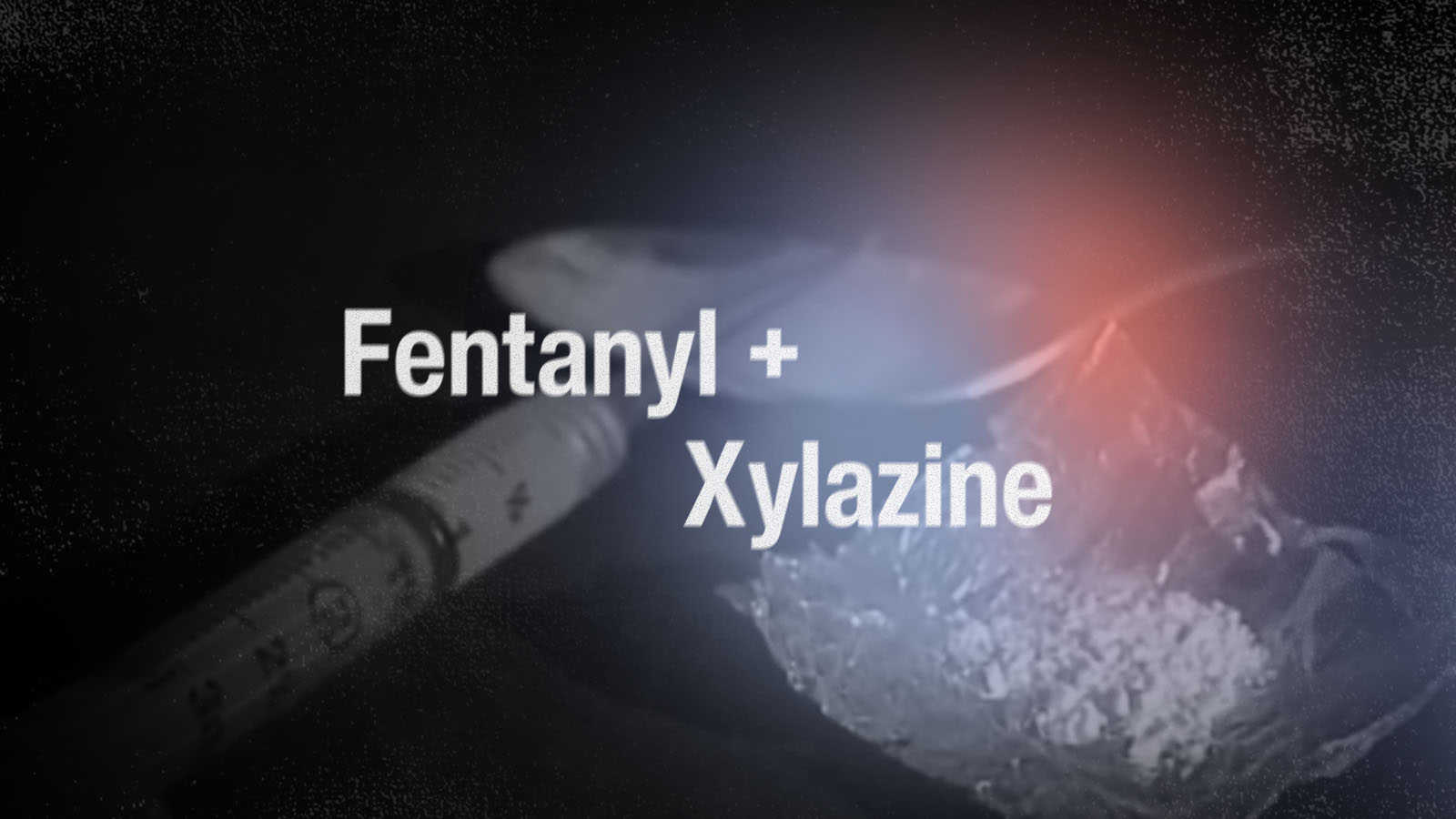
The V.I. Department of Justice announced Wednesday that Rhea had joined the effort, describing xylazine as a dangerous animal tranquilizer often mixed with fentanyl and other opioids. The department said the coalition believes federally classifying xylazine as a controlled substance is essential to helping law enforcement stop the drug’s spread.
“Illicit xylazine is a dangerous and growing threat, especially when mixed with opioids like fentanyl,” said Attorney General Gordon C. Rhea. “Classifying it as a controlled substance will give law enforcement critical tools to track, prevent, and combat its spread, help keep it from reaching our communities, and strengthen efforts to address the broader opioid crisis and save lives.”
The letter describes xylazine as a non-opioid veterinary tranquilizer for large animals such as horses and deer. It is not approved for human use and has no accepted medical use in humans. Widely known on the street as “tranq,” xylazine has in recent years become a commonly used adulterant in illicit opioids, most often fentanyl.
The attorneys general pointed to federal health and law enforcement warnings to underscore the threat. The Drug Enforcement Administration has warned that xylazine is “making the deadliest drug threat our country has ever faced, fentanyl, even deadlier.” The coalition also said the DEA considers xylazine dangerous enough to have issued multiple Public Safety Alerts.
According to the letter, xylazine is a sedative that can depress breathing, blood pressure, heart rate, and body temperature, and can also cause unconsciousness, necrosis, and death. The coalition also cited the Centers for Disease Control and Prevention, which said xylazine reduces the effectiveness of traditional opioid rescue treatment “because xylazine is not an opioid, it does not respond to opioid reversal agents such as naloxone; therefore, if illicit opioid products containing xylazine are used, naloxone might be less effective in fully reversing an overdose.”
The letter further cites the National Institute on Drug Abuse, which says fatalities involving xylazine are increasing exponentially. According to the DEA, xylazine is now present in all 50 states, while national statistics on its presence in overdose deaths are “widely underestimated” because of limited testing and differences in testing procedures among state and local law enforcement agencies. Even with those limitations, the coalition said DEA has reported significant increases in xylazine-positive deaths. The attorneys general also cited the CDC’s State Unintentional Drug Overdose Reporting System, which shows xylazine was present in 12.2 percent of overdoses, a significant increase from 2019.
The attorneys general said xylazine also continues to be trafficked into the United States. Citing the DEA’s Joint Intelligence National Threat Response–El Paso Illicit Drug Lab, the letter said only 15 percent of xylazine-adulterated fentanyl samples tested by the lab contained markers tied to xylazine repurposed for veterinary preparation. According to the letter, that means the vast majority of xylazine-adulterated fentanyl samples came from powdered sources smuggled into the United States. Because xylazine is relatively inexpensive, the attorneys general said DEA has warned that its use as an adulterant in other illicit drugs is increasing traffickers’ profits.
The coalition also pointed to federal efforts already underway to contain the drug. It said the increase in deaths led the Food and Drug Administration to attempt to restrict unlawful xylazine importation and limit importation and distribution to legitimate veterinary use in the United States. The letter also states that federal authorities have encountered xylazine in fentanyl trafficked from Mexico by the Sinaloa and Jalisco cartels using chemicals sourced from China. It notes that the U.S. Treasury Department last September sanctioned Guangzhou Tengyue Chemical Co., Ltd., a Chinese chemical manufacturer, and that the U.S. Department of Justice also obtained indictments against Guangzhou Tengyue and related entities for trafficking synthesized drugs and xylazine.
While many states have already scheduled xylazine under their controlled substances laws, the coalition said those classifications vary and Congress must move quickly to classify the illicit use of xylazine under Schedule III of the federal Controlled Substances Act. According to the letter, the Combating Illicit Xylazine Act would give the DEA tools to track manufacturing, prevent diversion, and require analysis and reporting on illicit xylazine use. The Justice Department release said the bill would also mandate public reporting. With more information on the drug’s development, distribution, and use, the coalition argued, law enforcement professionals would be better equipped to fight what it described as a rising threat.
The attorneys general also framed the issue as part of the broader opioid crisis. In the letter, they said they have long been committed to helping communities recover from the opioid epidemic and have spent years on the front lines seeking accountability from opioid manufacturers, distributors, dispensers, and others in the supply chain for their role in unleashing the crisis. They said that, in addition to injunctive relief, billions of dollars are now flowing to communities across the country to help abate the epidemic. Still, they argued that the evolving opioid threat now requires government to confront the role xylazine is playing amid persistently high overdose deaths.
Last week, according to the Justice Department, the Senate Judiciary Committee advanced the legislation with strong bipartisan support. In their letter, the attorneys general urged Congress to pass the bill immediately to help address the opioid epidemic and save lives.
The coalition was led by the attorneys general of New York, Arkansas, Connecticut, and Tennessee. In addition to the U.S. Virgin Islands, the letter was joined by the attorneys general of American Samoa, Arizona, California, Colorado, Delaware, the District of Columbia, Georgia, Hawaii, Illinois, Indiana, Kansas, Kentucky, Louisiana, Maine, Michigan, Minnesota, Mississippi, Nevada, New Hampshire, New Jersey, New Mexico, North Carolina, North Dakota, Ohio, Oklahoma, Oregon, Pennsylvania, Rhode Island, South Carolina, South Dakota, Utah, Vermont, Virginia, Washington, West Virginia, and Wyoming.



Advertisements