

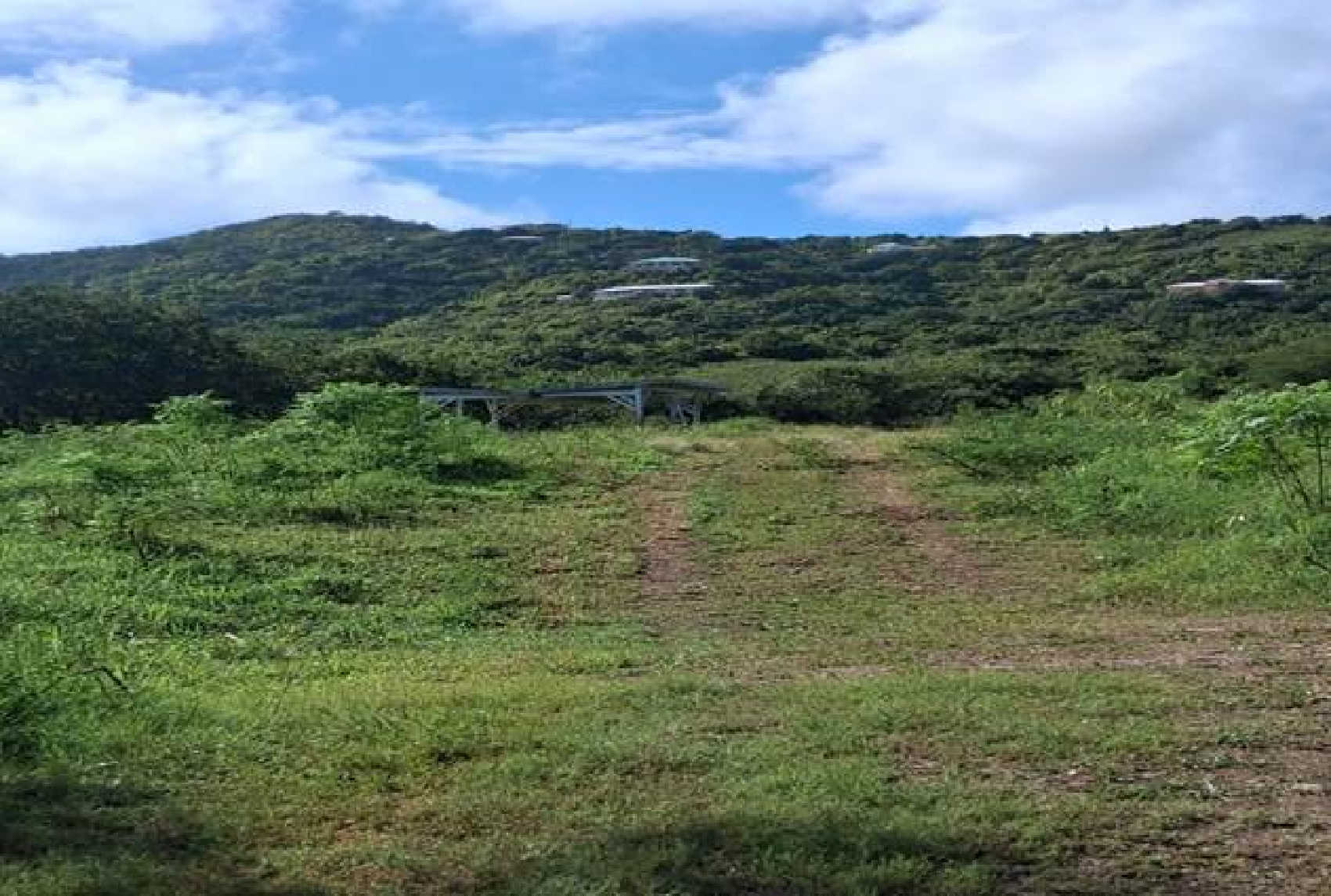
Photo of Lang’s Peak on St. Croix shows vegetation stress linked to warm, windy conditions. Photo Credit: MIKE MORGAN, JANUARY 24, 2026.
While drought conditions remain absent across most of Puerto Rico and St. Croix, moderate drought continues to affect St. Thomas and St. John as the northeastern Caribbean moves deeper into its dry season, according to the latest regional climate and drought assessment.

The U.S. Drought Monitor update valid January 27, shows Moderate Drought (D1) persisting on St. Thomas and St. John, while Abnormally Dry (D0) conditions are present on St. Croix. Puerto Rico remains largely drought-free, with only pockets of abnormal dryness along portions of the northwestern coast and eastern regions. No drought development is expected in Puerto Rico over the next three months.
Across the region, drier-than-normal conditions have persisted in the U.S. Virgin Islands and parts of Puerto Rico, driven in part by high winds that continue to dry out soils. Although intermittent rainfall has occurred, it has not been sufficient to significantly recharge groundwater or improve long-term soil moisture in the Virgin Islands.
In Puerto Rico, rainfall over the past two months has generally been consistent and not excessive, supporting most agricultural and forest operations. However, impacts varied by region. In the central interior—including Aguas Buenas, Caguas, Barranquitas, Orocovis, and Naranjito—farmers reported adequate rainfall that allowed fieldwork and supported fruit tree growth. Some farms in a small pocket of the Caguas area experienced dry conditions beginning in November, which stressed bean crops and affected germination and transplanting.
Conditions in the southwest also diverged. In Lajas, ranchers reported that prolonged dryness throughout 2025 continued to limit pasture growth. Although substantial rainfall occurred at the end of November, it was not enough to reverse pasture degradation. Since then, minimal rainfall has sustained dry conditions, leading ranchers to anticipate potential drought impacts by March if precipitation does not increase. In contrast, ranchers in nearby Cabo Rojo reported sufficient rainfall and green pastures, with no recent drought impacts.
No drought impacts were reported in Puerto Rico’s northern region, northeast, eastern, southern, or much of the western interior, where rainfall patterns have been more favorable.
In the Virgin Islands, all three islands are experiencing high and persistent winds that are accelerating soil drying. On St. Thomas, recent rains allowed vegetation to rebound and helped refill ponds, providing livestock and poultry farmers with access to feed. However, guinea grass is drying rapidly, soils are beginning to show signs of stress, and rain is frequently running off rather than penetrating the ground. Farmers in Bordeaux continue to report road damage from erosion, while groundwater levels show little improvement.
On St. John, intermittent rainfall combined with strong winds has left soil moisture uneven. Farmers are actively preparing land and planting specialty crops, microgreens, fruit trees, and quick-cycle crops to maintain production. Growers are closely monitoring banana crops for fungal issues, and erosion continues to affect road access in some areas.
On St. Croix, recent rainfall provided some short-term relief, but farmers reported that sporadic rain creates a false sense of water availability. Soil erosion and loss remain ongoing challenges. Livestock farmers are rotating animals and preparing for the summer months, planting row and specialty crops, and establishing drought-tolerant vetiver grass to reduce erosion.
Streamflow and soil moisture data further reflect mixed conditions across Puerto Rico. Seven-day average streamflows are below to much below normal in the eastern interior and parts of the interior, according to the U.S. Geological Survey. Other streams are near normal or above normal, with some rivers in the southwest—including the Río Guanajibo—running near record-high levels. Dry soils have expanded across much of the southern plains, northwest plains, and eastern interior, while wetter soils persist in the far east and west-southwest.
Vegetation health indicators show generally favorable conditions across much of Puerto Rico’s interior, but unfavorable conditions are present in portions of the eastern interior and the extreme northwest coast, where vegetation stress may affect crop and pasture productivity.
Looking ahead, climate models favor near-normal precipitation across Puerto Rico and the U.S. Virgin Islands from February through April 2026, with a 70 percent chance of above-normal temperatures. Even so, drought is forecast to persist on St. Thomas and St. John as the dry season continues, and is expected to develop on St. Croix. No drought development is anticipated for Puerto Rico during the same period.
Officials noted the importance of continued monitoring and reporting. Farmers are encouraged to document impacts through the Drought Condition Monitoring Observations and Reports tool or by participating in the Caribbean Climate Hub reporting network.
The update was prepared by a multi-agency team including the NOAA National Weather Service San Juan Weather Forecast Office, the USDA Caribbean Climate Hub, the University of the Virgin Islands, the NOAA National Integrated Drought Information System, the University of Puerto Rico Office of Climatology, the U.S. Geological Survey Caribbean-Florida Water Science Center, and the USDA Office of the Chief Economist.



Advertisements