
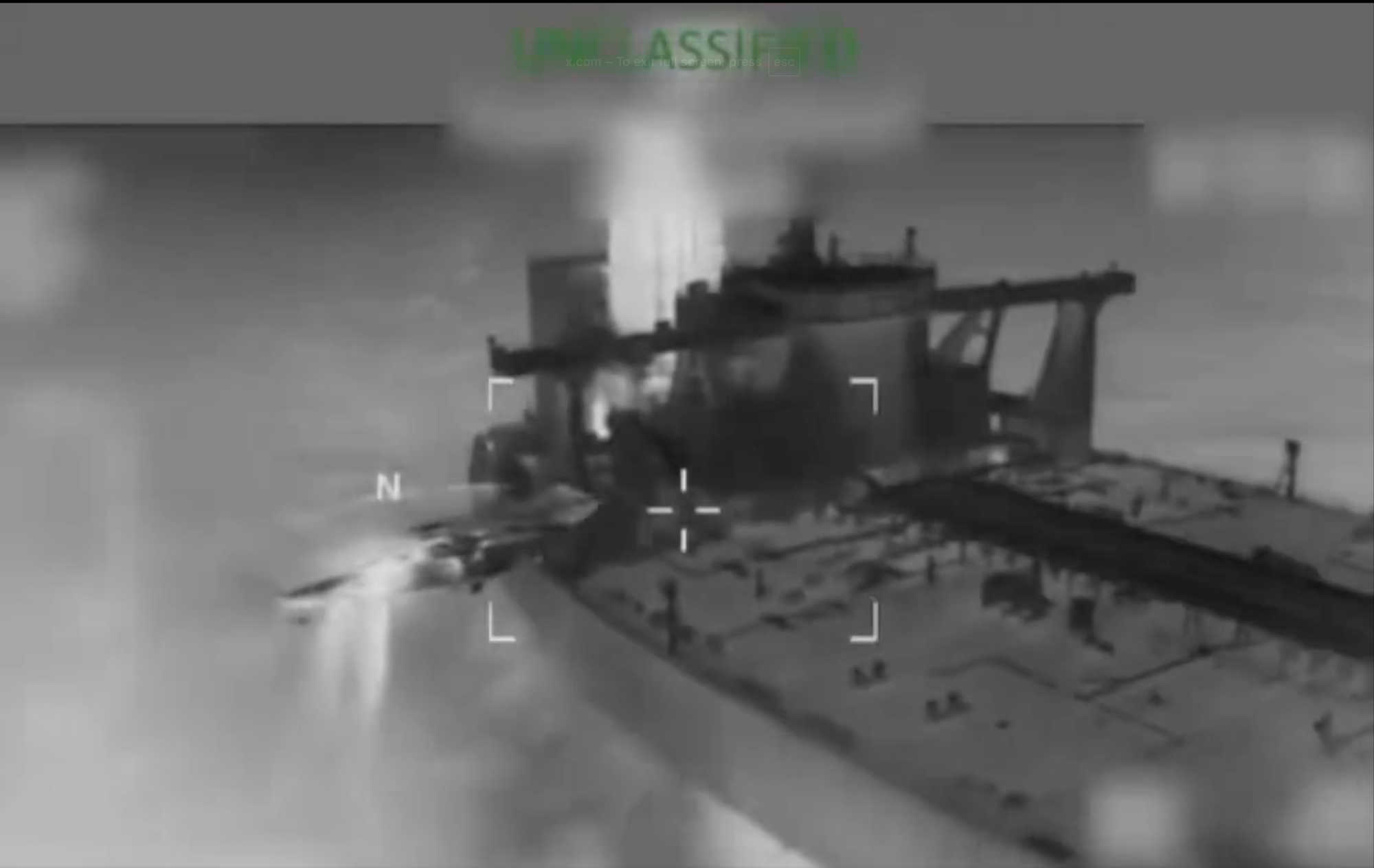
One of the oil tankers seized by U.S. authorities while transporting Venezuelan crude in international waters.
The United States has escalated its economic campaign against Venezuela by seizing two oil tankers linked to the government of Nicolás Maduro, a move administration officials described as a major enforcement action under the embargo on Venezuelan crude exports.

U.S. officials said on Wednesday the seizures were carried out this week in international waters, with U.S. special forces boarding the Russian-flagged tanker Bella 1 in the North Atlantic on Wednesday after tracking the vessel for approximately two weeks. At the same time, the U.S. Coast Guard intercepted a second tanker in the Caribbean Sea. Both vessels were allegedly transporting Venezuelan oil in violation of U.S. sanctions.
Administration officials said the operations were intended to enforce existing sanctions and disrupt revenue streams they say fund narco-terrorism activities tied to Venezuela’s leadership. The seizures follow President Donald Trump’s declaration in December 2025 of a blockade on sanctioned Venezuelan oil tankers as part of Operation Southern Spear, a campaign the administration says is aimed at curbing drug trafficking and increasing pressure on Maduro’s government.
According to U.S. officials, the Bella 1 had successfully evaded the embargo since mid-December, prompting the decision to conduct a high-seas boarding. The use of such a tactic is rare and has raised concerns about diplomatic fallout, particularly given Russia’s economic ties to Venezuela and the tanker’s Russian flag.
U.S. authorities said the actions were justified under international maritime law, citing violations of sanctions imposed in response to Venezuela’s disputed elections and alleged human rights abuses. Officials maintained that the seizures fall within U.S. sanction enforcement authority, even as legal experts debate the application of those laws to vessels sailing under neutral or foreign flags.
Venezuela’s foreign minister, Yván Gil, condemned the seizures, calling them “acts of piracy”, and said the Maduro government would seek recourse through the United Nations. He accused Washington of attempting to plunder Venezuela’s resources.
The Maduro government has faced increasing international isolation since 2018, as the United States recognized opposition figures as legitimate leaders and imposed sweeping sanctions that sharply reduced oil exports, long Venezuela’s primary source of revenue.
Energy analysts said the latest actions could further tighten global oil supply, adding pressure to already volatile markets. Estimates indicate the seized tankers were carrying millions of barrels of crude valued at hundreds of millions of dollars at current prices. Following news of the seizures, Brent crude prices rose modestly.
In Washington, the operations have drawn bipartisan support in Congress for targeting what lawmakers described as illicit funding sources. Some Democrats, however, have called for greater transparency regarding military tactics to prevent unintended escalation.
The administration has not disclosed what will ultimately happen to the seized oil, though officials said the cargoes would be redirected to offset enforcement costs associated with the embargo.
Russia has protested the boarding of its flagged vessel and warned of possible diplomatic consequences, while China, another ally of Maduro’s government, urged restraint to avoid broader instability in Latin America. Regional governments, including Colombia and Brazil, have expressed concern that deepening the embargo could worsen Venezuela’s economic crisis and contribute to increased refugee flows.
The United Nations Security Council is monitoring the situation, with some members calling for dialogue to de-escalate tensions. U.S. officials said the latest enforcement actions build on earlier steps taken since August 2025, including the designation of Venezuelan cartels as terrorist organizations and increased U.S. military deployments in the Caribbean.

Trump has defended the strategy as necessary to stem fentanyl trafficking and counter regional security threats, while critics argue the approach risks humanitarian consequences without addressing underlying causes of Venezuela’s crisis. No timeline has been announced for lifting the embargo or easing the measures.


Advertisements