

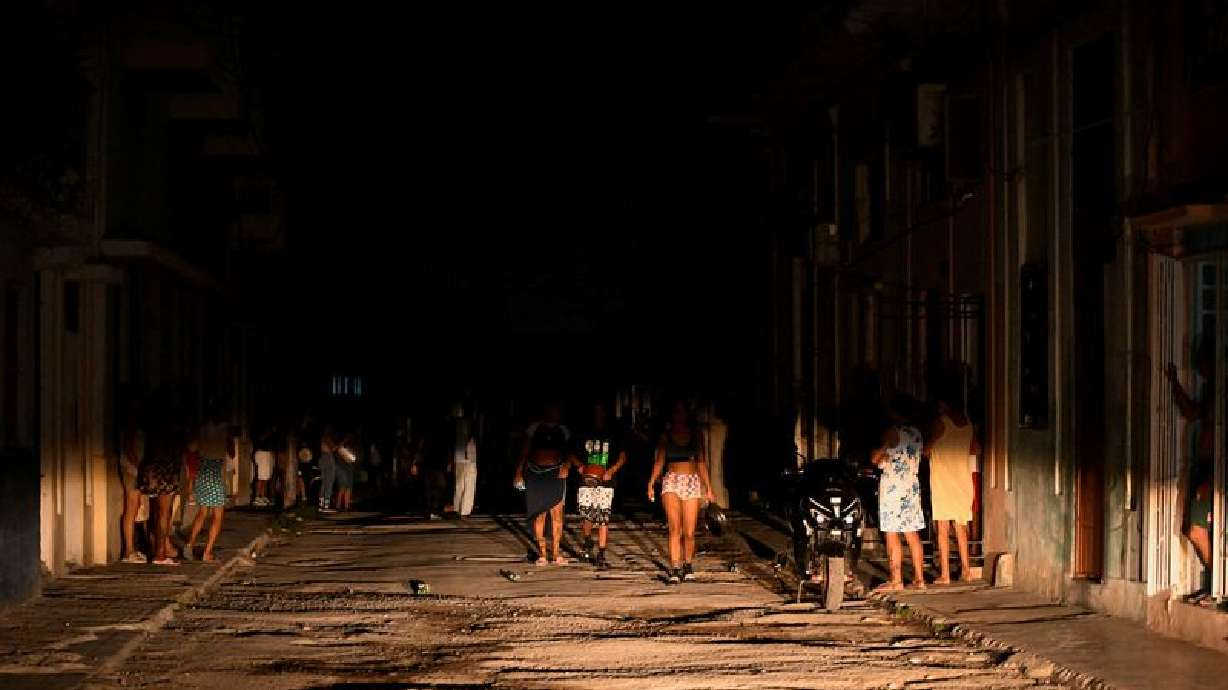
A protest in Cuba on March 7, 2026 as U.S. oil restrictions and sanctions intensify, fueling a widening crisis across the island.
Cuba’s crisis took another severe turn Monday when the country’s national electric grid collapsed, plunging around 10 million people into darkness and exposing how badly the island’s energy system has deteriorated under the combined weight of aging infrastructure and a U.S.-imposed oil blockade. Reuters reported that officials were investigating the cause, with early indications pointing to a transmission problem rather than a major generating-unit failure, even as small “microsystems” were being brought back online in pieces across the country.

The latest breakdown has been tied to a wider energy squeeze that intensified after Washington cut off Venezuelan oil shipments to Cuba and threatened tariffs on any country that sells oil to the island. President Miguel Díaz-Canel said Friday that no fuel had entered Cuba in three months, Reuters reported, while ship-tracking data reviewed by Reuters showed only two small oil-related cargoes reaching Cuba this year — one fuel shipment from Mexico in January and one liquefied petroleum gas shipment from Jamaica in February — with no Venezuelan fuel arriving this year.
The strain is now showing up everywhere. Reuters reported that many Cubans are spending most of their days without electricity, while prices are rising and fuel and medicines are being tightly rationed. AP reported that bus routes have been cut, gasoline is being sold only in foreign currency, and blackouts have become more punishing, adding to the hardship in a country where food, medicine and transport were already under pressure.
The health sector is among the hardest hit. In an interview with AP, Cuban Health Minister José Ángel Portal Miranda said 5 million people living with chronic illnesses are expected to have medications or treatments disrupted. That includes 16,000 cancer patients requiring radiotherapy and another 12,400 undergoing chemotherapy. AP also reported that cardiovascular care, orthopedics, oncology, kidney disease treatment, emergency ambulance services and care for critically ill patients who require electrical backup are among the areas most affected.
AP reported that ambulances are struggling to find fuel to respond to emergencies, persistent outages are hitting already deteriorated hospitals, and flights carrying vital supplies have been suspended because Cuba says it can no longer refuel aircraft at its airports. Portal told AP that CT scans and laboratory tests have been restricted, forcing doctors to rely more heavily on basic clinical methods and cutting many patients off from higher levels of care. He said the crisis is no longer only economic, but a threat to “basic human safety.”
The Pan American Health Organization has echoed the health impact in stark terms. In a March 6 assessment, PAHO said limits in energy availability have affected electricity-dependent health services, transport, cold-chain reliability, and the delivery of water, food and humanitarian assistance. PAHO said intensive care units and emergency services are particularly vulnerable because they depend on uninterrupted electricity, while fuel shortages and power instability are compromising vaccines, blood products, insulin and other temperature-sensitive medicines. The agency also warned that transport disruptions are hurting patient access to care.
Public unrest has followed. The latest outages helped trigger a rare violent protest over the weekend, while blackouts, food shortages and growing desperation have fueled broader public anger. Cuba has responded by opening talks with the United States, with Díaz-Canel saying those contacts should proceed on the basis of equality, sovereignty and self-determination.
Other countries have reacted as well. Russia condemned U.S. economic and political pressure on Cuba, with Foreign Minister Sergei Lavrov reaffirming support for Cuban sovereignty and calling such pressure unacceptable. Reuters also reported that Cuba’s foreign minister held talks with China’s foreign minister, with both sides agreeing to continue advancing bilateral relations.
Against that backdrop, President Donald Trump escalated his rhetoric Monday, telling reporters that he expected to have the “honor” of “taking Cuba in some form” and added, “I can do anything I want” with the country. The White House has not explained the legal basis for any possible intervention.



Advertisements