
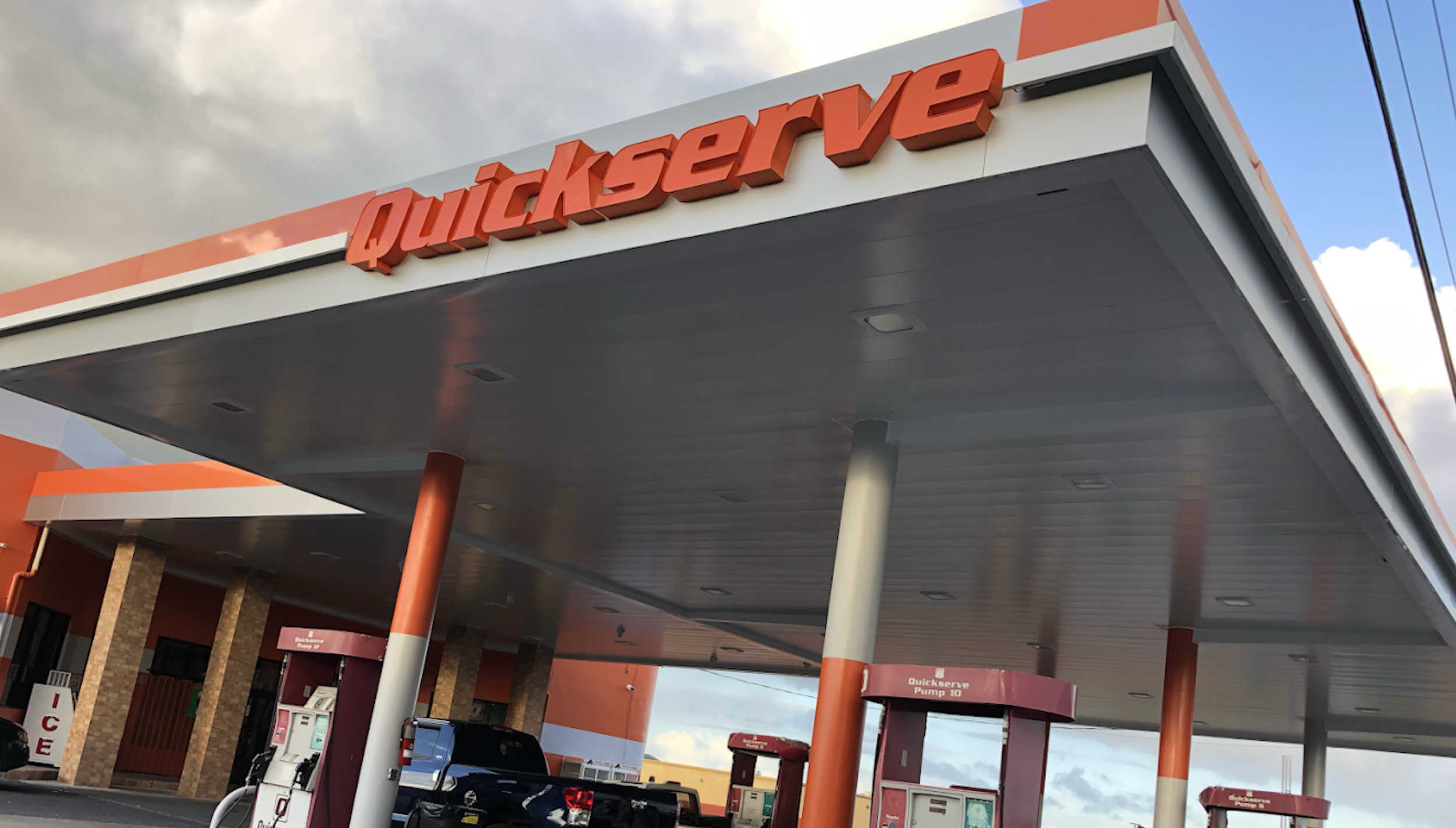
QuickServe Service Station is one of two gas stations now facing court action from DLCA as the government pushes to obtain fuel pricing, cost, and sales records tied to its transparency investigation.
The V.I. Department of Licensing and Consumer Affairs has intensified its push for fuel pricing transparency in the Virgin Islands by asking the Superior Court to force at least two gas stations to turn over years of records tied to fuel costs, pricing, and sales, after what the department says was a prolonged failure to comply with administrative subpoenas.

The latest legal action, taken last week, marks a deeper phase in the government’s effort to understand how fuel is priced in the territory. The issue has been building for years, especially as consumers and lawmakers questioned why prices in some districts remained high even when broader market prices had fallen.
According to information previously disclosed by DLCA, service station owners on St. Thomas and St. John largely ignored subpoenas issued as part of the department’s fuel price study. Those subpoenas required operators to provide bills of lading and contracts tied to the importation, retail sale, and transportation of regular, premium, and diesel gasoline dating back to May 1, 2022. Commissioner Nathalie Hodge said last November that the records are critical to the department’s ongoing effort to examine fuel pricing.
After that lack of response, the Department of Justice stepped in. The first round of civil complaints was filed in January. Of the four cases filed then, one has already ended in the agency’s favor, with Ali Baba Gas Station & Grocery ordered by the court to comply with DLCA’s subpoena. Three other matters remain unresolved.
The latest court actions were brought against Freedom City Service Station and A&H Service Station, which does business as QuickServe Service Station. According to the administrative subpoena described in the new filings, the businesses were directed to provide retail sales records, wholesale purchase records, and other fuel-related costing and pricing information dating back to May 2020 by the end of July 2025. DLCA says neither business has responded.
The attached court filing involving Freedom City Service Station adds more detail to the government’s position. In that petition, DLCA, through the Department of Justice has asked the Superior Court to order Freedom City Service Station, LLC to “fully and immediately comply” with an administrative subpoena that the department says was lawfully issued under Virgin Islands law. The petition states that the subpoena was served on or about June 9, 2025, and required the business to produce responsive materials by 5:00 p.m. on July 3, 2025.
According to that filing, the department sought seven categories of records covering the period beginning May 1, 2020 to the present: retail sales records, wholesale purchase records, transportation and delivery costs, operating costs and overhead, pricing methodologies, tax records, and compliance and regulatory filings.
The government argues in court that the requested information is directly tied to DLCA’s legal authority to investigate fuel pricing and quantities in the Virgin Islands. The petition says DLCA is empowered to carry out studies and investigations necessary to determine prices and quantities of petroleum derivatives and can issue subpoenas to obtain that information. The filing further states that Freedom City’s failure to comply “has hindered and continues to impede the DLCA’s lawful investigation into practices that directly affect consumers and businesses in the Virgin Islands.”
Through the petition, DLCA is asking the court to grant enforcement, order Freedom City to produce the requested records within 30 days of a court order, and award the government its costs and reasonable attorney’s fees connected to the case.
The dispute over fuel pricing is not new. DLCA has previously used subpoenas in an attempt to force more transparency after gas station owners kept prices elevated despite major declines in the wider market. On St. Croix, prices only came down after DLCA threatened to invoke the territory’s price control law. On St. Thomas and St. John, however, prices remained stubbornly high, prompting the 2022 round of subpoenas and the current push for court-backed enforcement.

What the government is now making clear is that it is no longer relying on voluntary compliance. With at least one station already ordered by the court to respond, and new petitions now seeking to compel additional businesses, the fight over who must disclose fuel pricing information in the Virgin Islands is moving more squarely into the courts.


Advertisements